


We specialize in producing all kinds of Engine for G-Drive products, mainly High Power Diesel Engine for Business Or Idustrial Use, Cummins Low Power Diesel Engine, Cummins Diesel Engine, QSG12G3 288KW 320KW Cummins Diesel Engine, etc.
Cummins Co., Ltd. was established in 1919. After years of operation, it has mature technical expertise, advanced process equipment, extensive production experience, and a complete service system.
We have established long-term cooperative relationships with customers around the world, allowing customers around the world to buy high-quality products and enjoy excellent customer service.
Company Advantages
Well-Experienced
Cummins Co., Ltd was established in 1919, with more than 100 years of manufacturing experience, creating many successful cases and can provide customers with perfect solutions.
Advanced Production Equipment
We are a full-service company providing complete design, R&D, production and sales services. Our production workshop is equipped with the most advanced equipment.
High-quality Products
The company is committed to producing high-quality products that meet customer's standards. The company uses advanced technology and equipment to ensure consistency in the quality of its products.
24-hours Online
We have an experienced and professional customer support team to provide flexible service to customers around the world, giving full support from product design to marketing. Our multi-lingual sales staff will provide you with 24/7 hours online service, and use their rich industry experience and powerful product database to solve your doubts about product specifications, usage and design.
A Global Supply Chain
We are present globally, backed by local customer service, and a strong sales representatives network. Our logistic hubs with large storage capacities located close to our customer facilities (Europe, Americas, Asia Pacific) ensure short time deliveries.
Competitive Price
We have professional sourcing team and cost accounting team, stive to reduce cost and profit and provide you a good price. Our pricing policies are designed to offer affordable options while not compromising on quality. We also can offer different discounts based on your order quantity.
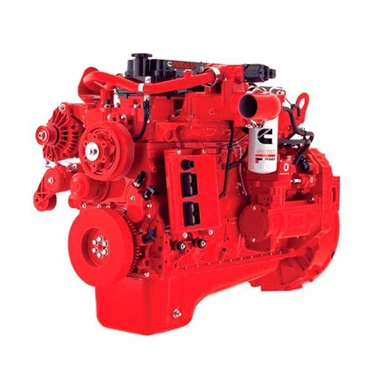
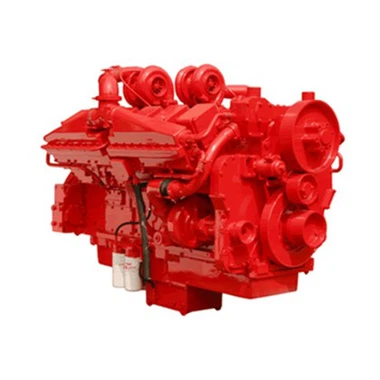

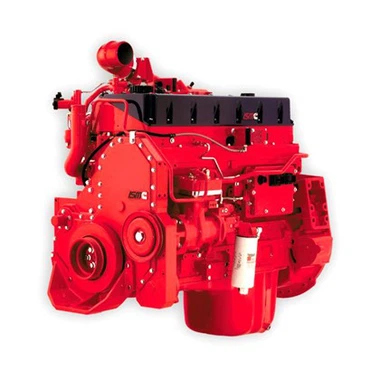
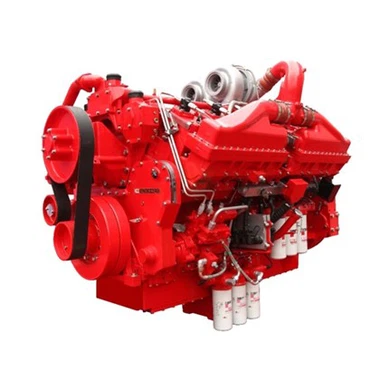
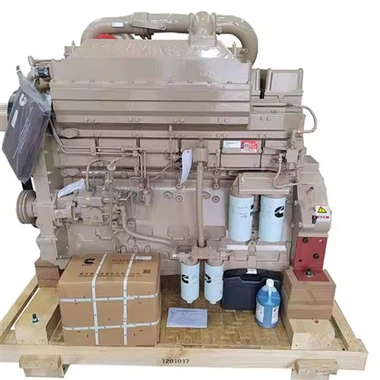
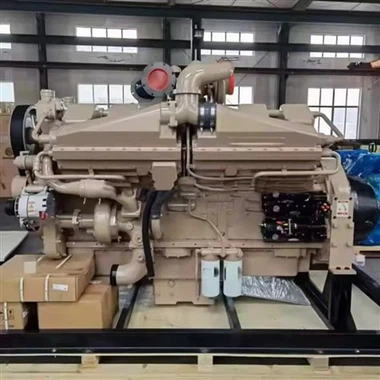
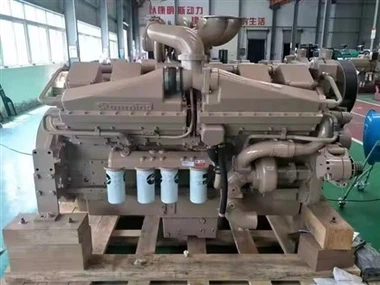
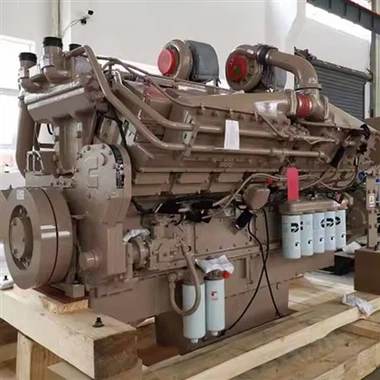

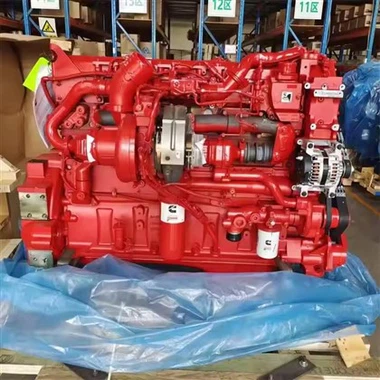
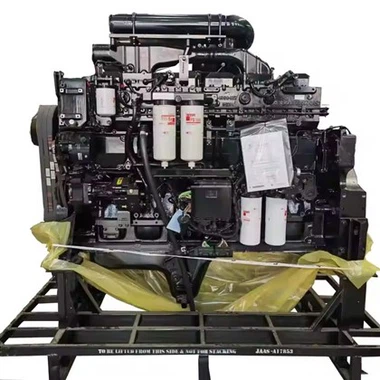
A diesel engine, also known as the compression-ignition engine, is an internal combustion engine. The engine works as it uses the heat of compression to initiate ignition and burns the diesel fuel that has been injected into the combustion chamber. It converts the chemical energy stored in the fuel into mechanical energy, which can be used to power freight trucks, large tractors, locomotives, and marine vessels. A limited number of automobiles also are diesel-powered, as are some electric-power generator sets.
Diesel engines utilize four-stroke combustion cycle to convert chemical energy available in diesel fuel into mechanical energy. This mechanical power moves the pistons up and down (pistons are designed inside the cylinder). Hence, the crankshafts connected with pistons move up and down accordingly. This motion is known as the linear motion, which helps create the rotary motion in order to turn the wheel of machinery forward.
Diesel is Fuel Efficient
As fuel prices continue to fluctuate, many business owners are concerned about their costs, especially when you consider that you may have to keep the generator running for hours non-stop during a power outage. Keep in mind that diesel has a much higher energy density than gas, which means that the generator will run longer with diesel than it would with the same volume of gas, and at a near negligible price increase. For example, a 120kW diesel generator achieves a fuel efficiency of between 10.9 and 32.1 liters per hour. This is much better than what gasoline engines offer. This is why diesel engines are an obvious choice for heavy-duty equipment like industrial power generators.
Diesel Generators are Easy to Maintain
Diesel generators are a great option for busy professionals because they are extremely low maintenance. This is thanks to the fact that they require fewer components to power up. Unlike gasoline-operated engines that rely on spark ignition, diesel engines employ compression. Air is usually drawn into the engine and subjected to high compression that causes the fuel to heat up and ignite. With a diesel engine, you don't have to change spark plugs or overhaul a carburetor. One less component in a machine is one less potential repair job. Depending on the model, a diesel unit can operate for up to 30,000 hours before any major maintenance is required.
Another important point you should note is that diesel engines operate at less revolutions per minute than gasoline engines. They do so without compromising power output. Fewer revolutions per minute reduces the general wear and tear that comes with running a generator frequently and for extended periods of time.
Diesel Engines are Very Durable
Diesel engines are designed to hold up through much wear and tear at industrial sites. Diesel fuel has self-lubricating properties that contribute significantly to the longevity of a generator. However, like gasoline engines, they do require extra lubrication to maintain their effectiveness over time.
Having fewer components than a gasoline engine further reduces the probability of a breakdown. It is also good to note that diesel engines are built to withstand very high temperatures, so the risk of overheating is low as long as the system is well maintained. The engine simplicity and design make diesel generators more rugged and reliable in the workplace.
Diesel Generators Have Uninterrupted Power
Due to their durability, diesel generators can operate smoothly for a prolonged period of time. This results in continuous power supply even after a blackout that lasts hours. You will be able to keep all your critical systems operational without worrying about high fuel costs. Without a generator, your business could experience substantial financial losses due to the decline in production. A blackout could last for days, so it's best to prepare by investing in a diesel system that you can rely on when the unexpected happens.
Diesel Fuel is Safe to Store
Diesel fuel is safer to store than gasoline since it doesn't ignite as easily. It is still flammable, however, so it should be handled with care. The fuel should be stored away from any heat sources in case a spill was to happen. With proper storage, you can expect your diesel fuel to maintain its quality longer than gasoline.
Diesel Engines Have an Extended Lifespan
It is a known fact that diesel engines typically last longer than similar gasoline engines. With proper maintenance, your diesel-powered generator could last for a decade—or even two or three decades! As long as you care for it well, you can minimize the risk of expensive repairs or having to replace your system much earlier than expected.
Diesel Engines Have a High Power Capacity
Diesel engines are often used in industrial settings because they're capable of managing huge power loads without any problem. When the power goes out, you won't have to pick and choose what to power up. With the right size generator in place, you can keep all of your important electrical equipment operational when you experience a loss of power.

Component of Engine for G-Drive
Block: The block is the backbone of the diesel engine. It is a large block of metal, usually aluminum or steel, with holes cut into it for the cylinders.
Cylinders: The cylinders of an diesel engine are where the work is done. Fuel is injected into the cylinders, where it is ignited by squeezing the diesel and air together making an explosion. This explosion moves the pistons, doing work, allowing the vehicle to move forward.
Pistons: Pistons are devices that slide up and down inside the cylinders. Their job is to slide in and out, connected to the crankshaft, in order to compress the air injected to the chamber—this causes the air to heat up. The volume of air that enters the chamber is compressed about 14-25 times its original volume.
Camshaft: A camshaft is a device that manages the timing of the diesel engine. A camshaft's job is to regulate when fuel is let into the engine, and when exhaust is let out. This seemingly simple job can have a great effect on the performance of the engine.
Injectors: The purpose of a fuel injector is to atomize the fuel. This means to turn the liquid fuel into a mist, which drastically increases its surface area. This allows the fuel to combust more quickly, giving greater impulse to the piston. Fuel injectors are an improvement over carburetors because they are lower maintenance, and atomize the fuel better. Fuel injection allows for higher engine efficiency, which can lead to more power, and better gas mileage.
Crankshaft: The crankshaft is the most important part of the diesel engine because it connects the parts together, and allows the engine to create power. Its purpose is to turn the linear (up and down) motion of the pistons into rotational motion. One end of the crankshaft is attached to the camshaft, via a timing belt. The other end is connected to the flywheel, which regulates the power coming out of the engine, sort of like a surge protector for your computer.
Starter motor: This is one of the biggest differences between a diesel engine and a gasoline one. Because diesel engines ignite their fuel through compression, the starter motor must be able to cause that compression, so the engine will begin to move. This means the battery on a diesel-engined car must be more powerful than the one on a gasoline-engined car.

Check the Fuel Section
Components related to fuel such as tanks and lids need to be inspected periodically. Make sure that the required fuel does not run out. Also check whether there is a leak which is indicated by the continuous smell of fuel.
Store the Diesel Engine in a Dry Area
This point is very important to remember. Your diesel engine should not be placed in a damp room which also stores a lot of flammable liquids.
Always Clean Before and After Use
Cleaning the diesel engine from dirt, oil and water is very important. It's a good idea to always clean the engine regularly, both before and after use. Wiping it a few days once a week also helps the engine last longer. The performance of the engine will also not be disturbed by the presence of precipitated dirt.
Warming up the Generator Periodically
Of course, engines are not used every day. Usually generators are used when there is a power outage or when doing activity outside without any socket connection at all. Even so, you have to keep warming it up so that the engine's performance remains proper as before.
Check Cables
Every time you want to use a generator, try to check the cables that will be plugged in firstly. Make sure nothing is burnt, shorted or bitten by mice. Don't let trifles cause big problems and harm your household.
Check the status of the generator battery
Checking the condition of the generator battery needs to be done every time you want to use it. Make sure that the battery is not corroded so that the generator can generate the required electricity supply.
Check All Generator Indicators
The existence of an indicator in the generator panel is useful for informing notification that occurs in the engine. The reason is the problem is not visible on the outside frequently. Therefore you need to pay close attention to each indicator so that the machines are maintained in good condition.
Pay attention to the Exhaust System
One sign that there is a problem with the generator engine is the color and amount of exhaust gas. If the color of the smoke is black or thick white and comes out in large quantities than usual, then you can confirm that there is a problem with the generator.
Replace Spare Parts According to Time
Make a good note of when the age limit for using the engine is. Also know what components must be replaced periodically in 6 months or 1 year. Make sure you replace worn out spare parts so that the generator's performance remains excellent.
Certifications
We have various technical certifications. The quality of our products is highly praised by customers.


Our Factory
We have a fully automatic CNC production line, and are committed to providing customers with the best products and services.


Frequently Asked Questions
We're professional Engine for G-Drive manufacturers in China, specialized in providing high quality customized service. We warmly welcome you to wholesale Engine for G-Drive for sale here from our factory. Contact us for quotation.