

The diesel generator set's speed is normal, but what is the reason for the unstable voltage? After many years of experience, reading this makes everything suddenly clear.
Aug 26, 2026
Leave a message

The diesel generator set's speed is normal, but what is the reason for the unstable voltage? After many years of experience, reading this makes everything suddenly clear.
The diesel engine speed is stable, indicating that the fuel system and governor are functioning properly. Therefore, all faults are concentrated in five main areas: generator excitation, voltage regulation, stator and rotor, load, and wiring.
Ⅰ. AVR Automatic Voltage Regulator Faults (Most Common)
1. Aging internal components of the AVR, damaged voltage stabilization circuit, swollen capacitors, loss of voltage regulation capability, causing voltage to fluctuate slightly with load.
2. Loose AVR wiring, oxidized terminals, or poor circuit connections, leading to intermittent excitation power supply.
3. AVR mismatch: using a low-quality AVR for a small generator, resulting in poor voltage regulation under load.
4. Poor AVR heat dissipation causing overheating, resulting in reduced voltage stabilization performance during operation.
Ⅱ. Excitation Circuit Faults
1. Excessively worn carbon brushes, insufficient spring tension of the brushes, or a loose brush holder causes intermittent contact with the slip rings, resulting in unstable excitation current → voltage fluctuations.
2. Carbon deposits, oil contamination, or oxidation on the rotor slip rings, causing fluctuating contact resistance with the brushes.
3. Partial short circuit or inter-turn leakage in the rotor excitation winding, leading to unstable excitation current.
4. Broken or poorly soldered excitation leads.
Ⅲ. Generator Stator-Side Problems
1. Minor inter-turn short circuits in the stator winding or aging phase insulation, causing output voltage to change with heating.
2. Loose or oxidized stator connection terminals, causing continuous voltage drop changes under load.
3. Loose neutral point wiring, resulting in three-phase voltage imbalance and overall drift.
Ⅳ. Load-Side Problems (Voltage Fluctuations Caused by External Power Usage)
1. Frequent load changes: frequent starting and stopping of diesel generators, welding machines, and high-power equipment, causing voltage dips or spikes due to inrush current.
2. Severe imbalance in three-phase loads: one phase overloaded, uneven three-phase voltages, resulting in overall voltage fluctuations.
3. Excessively long load circuits or cables with insufficient cross-section, causing significant voltage drops that vary with current.
4. Load has leakage or grounding faults, causing unstable current.
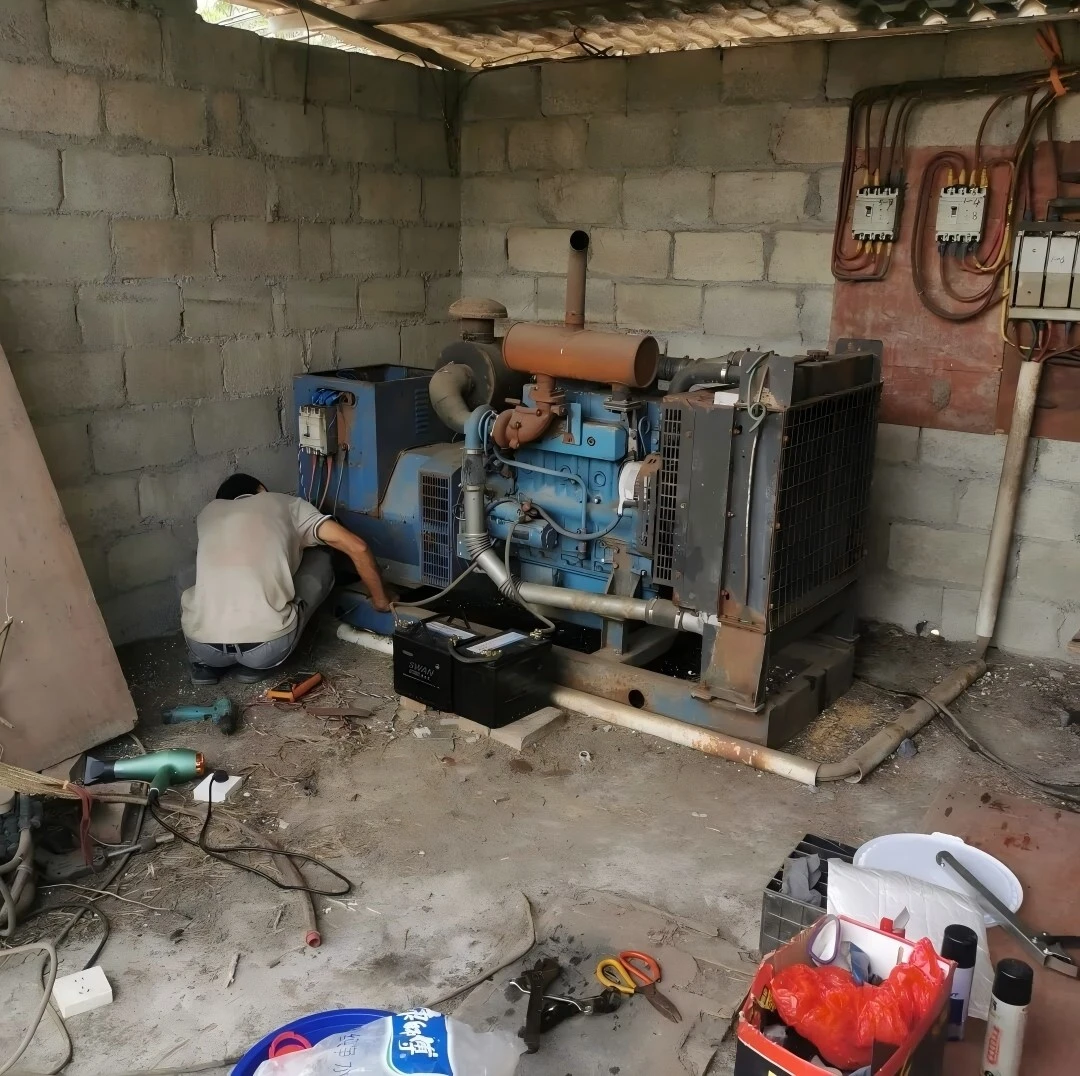
V. Issues Specific to Permanent Magnet Excitation / Auxiliary Excitation Generators
1. Permanent magnet generator (small excitation generator) pole loosening, permanent magnet demagnetization, unstable excitation power supply voltage.
2. Single rectifier diode (rectifier bridge) failure or cold solder joint in the exciter, large rectifier output ripple, voltage fluctuation.
VI. Mechanical and Interference Factors
1. Generator bearing wear, slight rotor rubbing, parameter changes in the winding after running and heating, voltage drift.
2. Large unit vibration causing intermittent disconnection of the AVR, carbon brushes, and terminal connections.
3. Harmonic interference from nearby inverters or welding machines affecting AVR sampling, causing voltage regulation disorders.
Simple Troubleshooting Steps (from easy to difficult)

1. No-load test: disconnect all loads and observe whether the voltage is stable
- No-load voltage is still unstable: fault is in the AVR, carbon brush slip ring, excitation winding, or rectifier bridge
- No-load is stable, but fluctuates under load: load imbalance, line voltage drop, or impact load
2. Check carbon brush length, slip ring cleanliness, and carbon brush spring
3. Tighten all terminals of AVR, excitation, and stator, and polish oxidized contacts
4. Replace with the same model AVR for testing to quickly determine if the voltage regulator board is good or bad
5. Measure three-phase output voltage to confirm whether there is three-phase imbalance
6. Check whether the excitation rectifier diodes are broken down or have cold solder joints
7. Check whether the permanent magnet exciter is demagnetized or output is unstable
8. Troubleshoot external cables and high-power impact loads