

What factors need to be considered when purchasing a diesel generator set? Friends who have procurement plans in the near future can take a look to avoid pitfalls.
Sep 09, 2026
Leave a message

What factors need to be considered when purchasing a diesel generator set? Friends who have procurement plans in the near future can take a look to avoid pitfalls.
Friends who are considering purchasing diesel generator sets in the near future might want to take a serious look; it may indeed be useful. This article is compiled based on years of experience in the industry and is provided solely for your reference and learning.
Key Considerations When Selecting a Diesel Generator Set
Ⅰ. Power Matching (Most Critical)
1. Calculate Actual Load Power
- Distinguish between commonly used power PRP (continuous long-term operation) and standby power ESP (emergency short-term, only 1 hour/12 hours). Standby power cannot be used at full load for long periods.
- Consider load type: resistive (lighting, heaters) and inductive (motors, pumps, air compressors). Motor starting current is 3~7 times rated current, so starting margin must be reserved.
2. Redundancy Reserve
- Reserve 20%~30% margin for conventional scenarios; reserve 40% for multiple units in parallel or frequent starting of high-power equipment; avoid running the unit below 30% load for long periods (prone to carbon buildup and cylinder scuffing).
3. Single Unit or Parallel Units
- For large load fluctuations, uninterrupted power supply, or future expansion, choose multiple units in parallel; for stable load and simple standby, select a single unit.
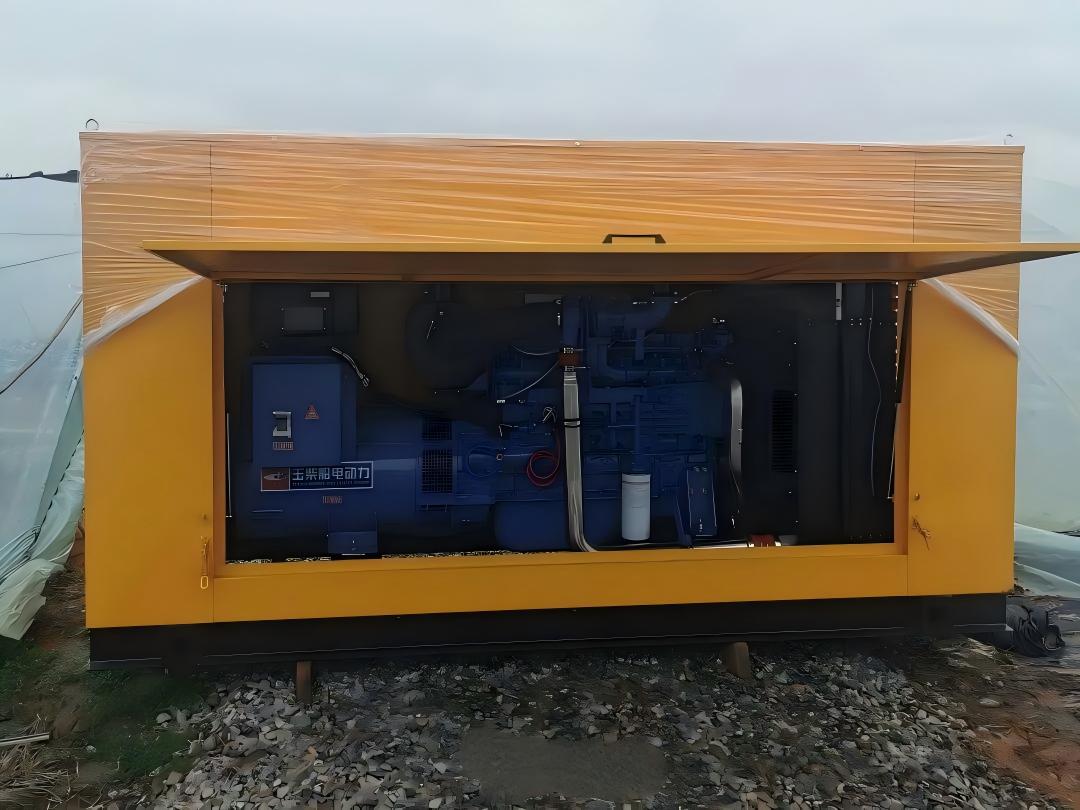
II. Brands and Quality of Diesel Engines
1. Classification and Grade
- High-end imported - Mainstream domestic - Secondary and tertiary domestic
2. Key parameters to look at
- Displacement, number of cylinders, cooling method (mainly water-cooled, small portable units air-cooled), fuel consumption, emission standards (China II / China III / China IV; urban areas and engine rooms must meet emission standards).
III. Generator (Alternator) Configuration
1. Excitation Method
- Brushless synchronous generator: brushless, low failure rate, first choice for engine rooms and long-term backup;
- Brushed: lower price, suitable for short-term temporary use at construction sites.
2. Material
Full copper winding > half copper half aluminum > aluminum wire. Aluminum wire generates more heat and ages easily, not recommended for long-term use.
3. Voltage Regulation Accuracy
General type ±5%; precision equipment (servers, medical, instruments) requires high-precision AVR regulation of ±1%.
IV. Control System (Automation Level)
1. Basic Manual Panel: local start and stop, suitable for temporary power at construction sites, lowest cost.
2. Automatic ATS Dual Power Control Cabinet: automatically starts when mains power fails, automatically stops when power returns; essential for shopping malls, hospitals, data centers.
3. High-end Intelligent Module: remote monitoring, mobile app, parallel module, fault alarms (oil pressure, water temperature, overload, overspeed protection).
V. Usage Scenarios and Environment

1. Placement Types
- Open Rack: For use in machine rooms, low cost, good heat dissipation;
- Silent Box: Noise reduction for residential areas, hospitals, the noise level is 70~75dB;
- Mobile Trailer: Temporary power supply at construction sites or outdoors, with brakes and towing;
- Container Unit: High power, long-term outdoor use, integrated rainproof and noise reduction.
2. Environmental Conditions
- Altitude: For altitudes >1000m, the air is thin, so derating is required or a highland-specific model should be selected;
- Temperature: Increase cooling in high-temperature areas, use water-jacket heaters in severe cold;
- Dust/Humidity: For mines or seaside locations, choose dustproof and anti-corrosion models.
VI. Fuel, Fuel Consumption, and Operating Costs
1. Fuel Consumption Rate: The lower the fuel consumption at full load, the more cost-effective for long-term use. Compare with high-quality models around 200g/kWh.
2. Fuel Tank Configuration: Built-in small tanks for short-term use; for long-term operation, an external fuel storage system is required.
3. Maintenance Cost: Consider availability of compatible parts, prices of filter and oil consumables, and whether there are local after-sales service points.
VII. Safety and Emission Regulations
1. Emission Standards: Indoor urban areas and environmentally regulated zones must meet China III/IV standards, remote construction sites may use China II.
2. Safety Configuration: Automatic protection against overspeed, high water temperature, low oil pressure, overload, short circuit; machine rooms require smoke exhaust, heat insulation, and fire prevention treatment.
3. Noise Reduction and Smoke Exhaust: Residential areas must have mufflers and exhaust ducts to avoid noise disturbance.
VIII. Budget, After-sales Service, and Warranty

1. You get what you pay for: low-priced aluminum wires and refurbished machines save money in the short term but have more faults later; prioritize brand-new complete units.
2. Warranty period: whole machine 1–2 years, original factory power warranty is more reliable.
3. Local after-sales service: whether there are repair outlets locally, whether faults can be addressed quickly on-site, speed of spare parts supply.
IX. Additional Special Requirements
1. Uninterrupted power supply (UPS linkage): match startup time (≤8s);
2. Anti-corrosion requirements: use stainless steel parts and anti-corrosion coatings for coastal chemical plants;
3. Low-temperature areas: install preheating devices and antifreeze systems.