

Do You Know Why Standby Diesel Generator Sets Need To Be Tested And Operated Regularly?
Aug 29, 2026
Leave a message

The standby diesel generator set is usually left idle for long periods and is only urgently started in the event of a power outage. Long-term idleness can instead lead to various faults. Therefore, regular no-load/load test runs are key to ensuring emergency reliability, explained in six main points:
Ⅰ. Lubrication System: Prevent Dry Friction and Corrosion of Machine Parts
1. When the machine is stopped and idle, all the engine oil flows back into the oil pan, leaving components such as the crankshaft, bearings, cylinder sleeves, and camshaft without an oil film, and water vapor in the air can easily cause metal pitting and rust spots.
2. Regular operation allows the engine oil to circulate and cover all moving parts, re-establishing the protective oil film, diluting water and impurities settled at the bottom, and preventing bearing seizure and cylinder scoring.
3. Avoid long-term static oil emulsification and oxidation deterioration; if left static for too long, the oil will become ineffective. Test runs can also intuitively determine whether the oil has water ingress or deterioration.
Ⅱ. Fuel System: Prevent Fuel Line Blockages and Injector Sticking
1. Diesel fuel stored for a long time will oxidize to produce gums and sediments, which can clog filters and fuel lines; injector needles may stick and seize, causing weak starting, cylinder misfire, and black smoke.
2. During operation, run the fuel circulation to flush the oil passages, removing water and impurities settled at the bottom of the tank; at the same time, keep the fuel pump and injectors active and flexible to prevent fuel supply failure in emergencies. 3. Drain the air from the fuel system to prevent being unable to start after a power outage due to air intake.

Ⅲ. Cooling System: Prevent Scale in Water Paths and Seal Aging
1. When the coolant is left stagnant for a long time, scale and algae can easily form on the walls of pipes and radiators, clogging the water channels; rubber hoses and seals under long-term static pressure easily harden, crack, and leak.
2. Running the unit to raise its temperature drives coolant circulation and inhibits scale buildup; thermal expansion and contraction help seals maintain elasticity and allow early detection of leaks or radiator blockages.
Ⅳ. Electrical and Starting System: Ensure Readiness to Start at Any Time
1. If the battery remains on long-term float charge while stationary, the plates can sulfate and lose power; during regular startups, the charger works to provide balanced charging to the battery, preventing insufficient voltage or a non-turning motor during power outage.
2. Check whether the starter motor, excitation system, voltage regulator, circuit breaker, and sensors are functioning properly to reveal loose connections, poor contact, or controller faults in advance.
3. Excitation windings exposed to long inactivity are prone to moisture and short circuits; running the unit dries internal moisture in the coils, preventing insulation degradation and tripping.
Ⅴ. Exhaust and Engine Body: Remove Internal Moisture, Prevent Rust and Corrosion
In a humid machine room, water can condense inside cylinders, exhaust pipes, and mufflers, corroding cylinder bodies and exhaust pipes, and even causing rust on the inner cylinder walls that scratches the pistons. Warming up the unit dries the body and exhaust system, reducing corrosion.
Ⅵ. Preemptive Troubleshooting: Prevent Failure at Critical Moments
Regular operation allows on-site visual checks:
- Look for abnormal noises, oil leaks, water leaks, or air leaks;
- Check if voltage, frequency, water temperature, and oil pressure meet standards;
- Ensure switches and automatic control functions are normal.
Units that have been idle for many years are highly likely to fail to start after mains power is cut off, losing their backup functionality.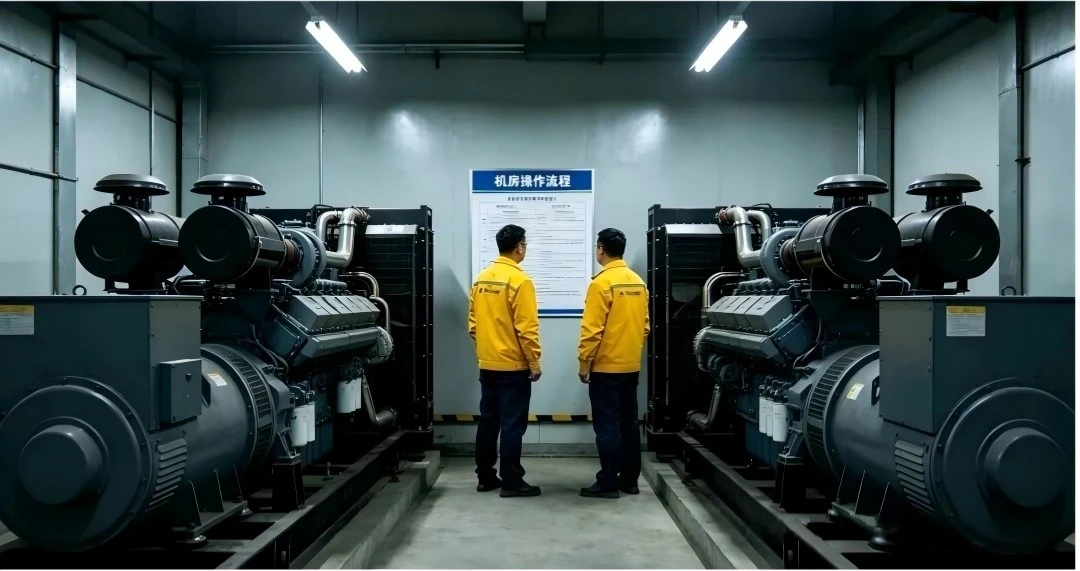
Regular Standard Operating Requirements
1. Ordinary standby units: Run unloaded once a week for 3–8 minutes, and run under load once a month for 10–20 minutes. (Recommended)
2. High-reliability scenarios (hospitals, data centers, fire protection): Conduct a monthly under-load test run. (Recommended)
3. In humid and low-temperature areas, appropriately increase the frequency of test runs; each run should continue until the water temperature and oil temperature reach normal operating levels before shutting down. Do not start and stop in just a few seconds.
In brief:
standby units do not break down if unused, but they easily become unusable when activated; regular operation maintains the activity of lubrication, oil circuits, electrical circuits, and cooling systems, eliminates hidden faults in advance, and ensures reliable operation the moment of power failure.