

Diesel Generator Set / Do You Know What Tasks Need To Be Completed From The Assembly Of The Entire Unit To Its Commissioning And Delivery?
Sep 23, 2026
Leave a message

Introduction: The workflow of a diesel generator set from complete assembly to commissioning and factory release can be divided into four major stages: post-assembly static inspection, no-load commissioning, load dynamic testing, and protection function verification. Only after completing all these steps can the unit be considered qualified for factory release.
I. Post-Assembly Static Inspection (Power Off, Engine Not Started)
1. Mechanical Assembly Inspection
Tighten all engine and generator shock absorber bolts; align the coupler with no offset or gap; ensure oil pipe and radiator pipe joints are fastened with no leakage risk; exhaust pipe sealing is firm, and brackets are not loose.
Check that the three filters, engine oil, and antifreeze are properly filled, and that the oil level is within the standard scale range.
2. Electrical Circuit Check
Check the control panel, AVR voltage regulation board, speed sensor, and battery circuits; ensure the yellow-green dual-color grounding wire is reliably connected to the unit base; wiring harness clips are secured, with no wire crushing or wear; battery positive and negative terminals are securely connected with no loose or short circuit.
3. Control Cabinet Appearance and Accessories Check
Ensure the key switch, emergency stop button, start/stop buttons, and indicator lights function properly; ATS interface and communication terminal wiring are standard; nameplate parameters (power, voltage, speed) match the model of the complete set.
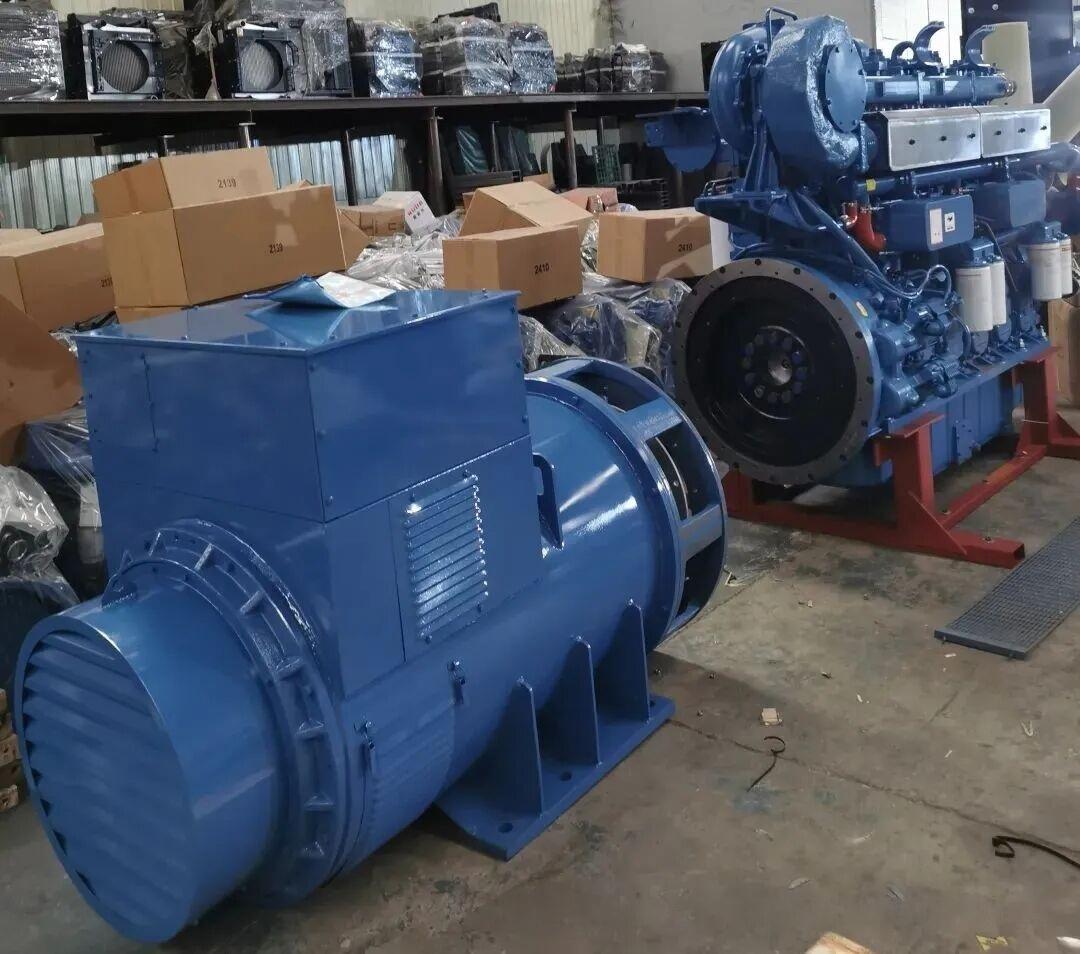
II. Power-On Static Commissioning (Engine Not Started, Electrical Test Only)
1. Insert the control cabinet key, turn on the main power switch, and the controller screen performs a power-on self-test.
2. Check each signal collected by the controller: battery voltage, water temperature sensor, engine oil pressure sensor feedback values are normal, with no sensor open-circuit alarms.
3. Simulate fault signal tests: short-circuit low oil pressure and high-temperature lines; the panel fault red light and buzzer immediately activate, and the fault code displays correctly.
4. Panel button operation test: manual/automatic mode switching, breaker on/off buttons, start/stop buttons respond quickly with no lag; emergency stop button locks when pressed and resets correctly when turned.
III. No-Load Start-Up Commissioning (No External Load, Basic Break-In Condition)
1. Switch to manual mode, press and hold the start button to start the diesel engine, observe smooth starter operation, and successful ignition within 3 seconds.
2. Idle run for 3–5 minutes, observing:
① Mechanical: no abnormal vibration or noise, no leakage in oil or water lines;
② Engine data: oil pressure and coolant temperature gradually rise to standard ranges;
③ Electrical: no-load three-phase voltage stable at 400V, frequency stable at 50Hz, with balanced three-phase voltage and no deviation.
3. Gradually increase to rated speed for stable operation, recording voltage, frequency, oil pressure, and water temperature steady-state parameters.
4. Governor system test: briefly increase and decrease throttle, ensuring smooth speed rise and fall with no hunting or speed oscillation.
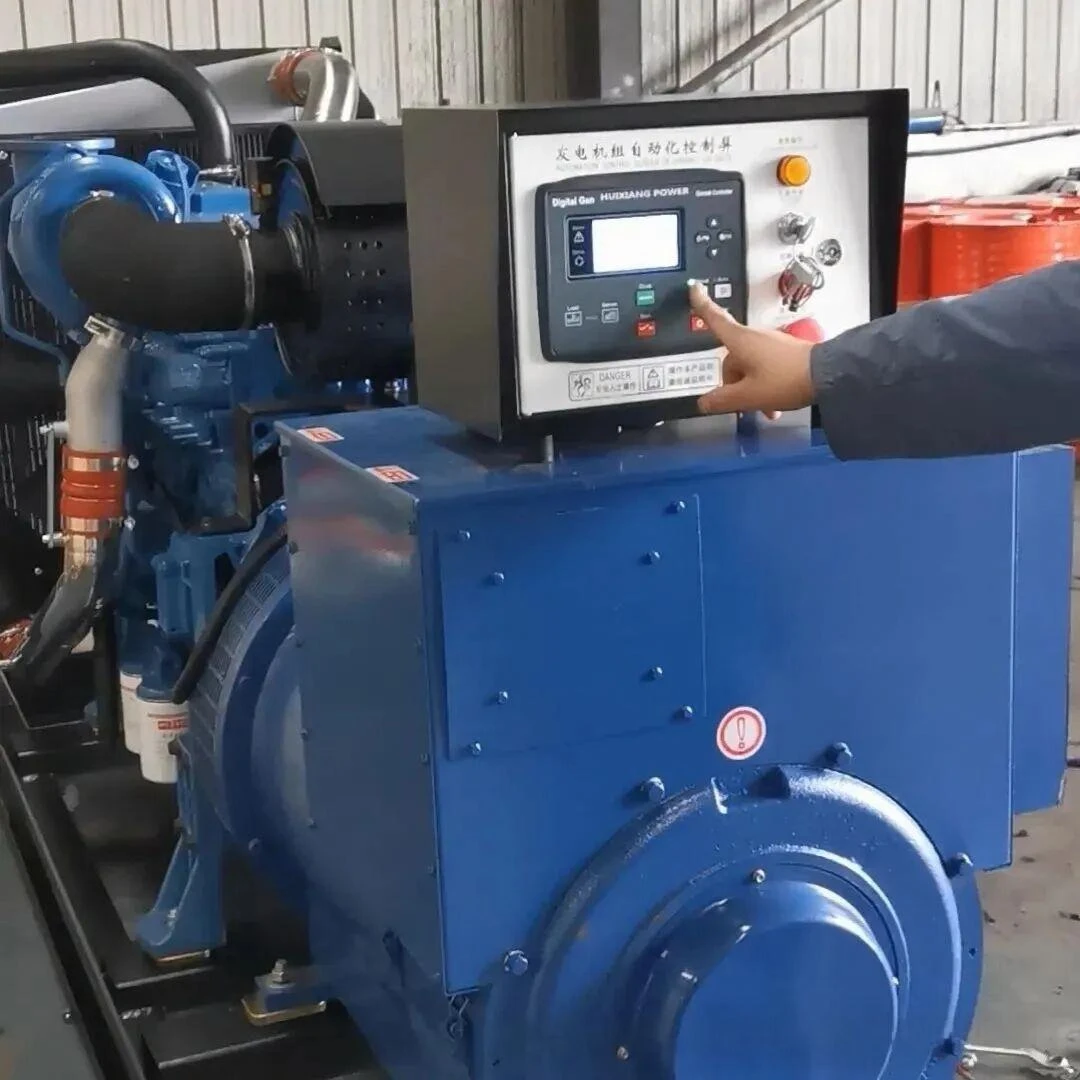
IV. Load Performance Testing (Core Factory Inspection, Gradual Load Application)
1. Graded Load Test: 25% load → 50% load → 75% load → 100% rated full load. Record real-time three-phase current, voltage, power, water temperature, and oil pressure. The three-phase current difference should not exceed 5%; the load balance is considered qualified.
2. Sudden Load Addition and Removal Dynamic Test:
Instantly remove all load at full load-voltage and frequency fluctuations should be within national standard limits, quickly return to stable operation, with no shutdown and no alarms; instantly apply rated load at no load-unit speed regulation and voltage stabilization response should be normal, with no tripping and no stalling.
V. Full Set of Safety Protection Function Verification (Ensure Automatic Shutdown on Faults)
Simulate faults one by one to verify whether the unit's automatic protection actions are effective:
1. Low Oil Pressure Protection: Manually disconnect the oil pressure sensor; the unit should issue a delayed alarm and automatically shut down.
2. High Temperature Protection: Simulate water temperature exceeding the upper limit; alarm and shutdown should occur.
3. Overspeed Protection: Increase the speed beyond rated value; the unit should immediately cut fuel and shut down.
4. Electrical Protection: Overvoltage, undervoltage, phase loss, overload; the controller should automatically trip to protect the generator.
5. Emergency Stop Test: Press the emergency stop button during operation; the diesel engine should immediately shut down, cutting off the output power.
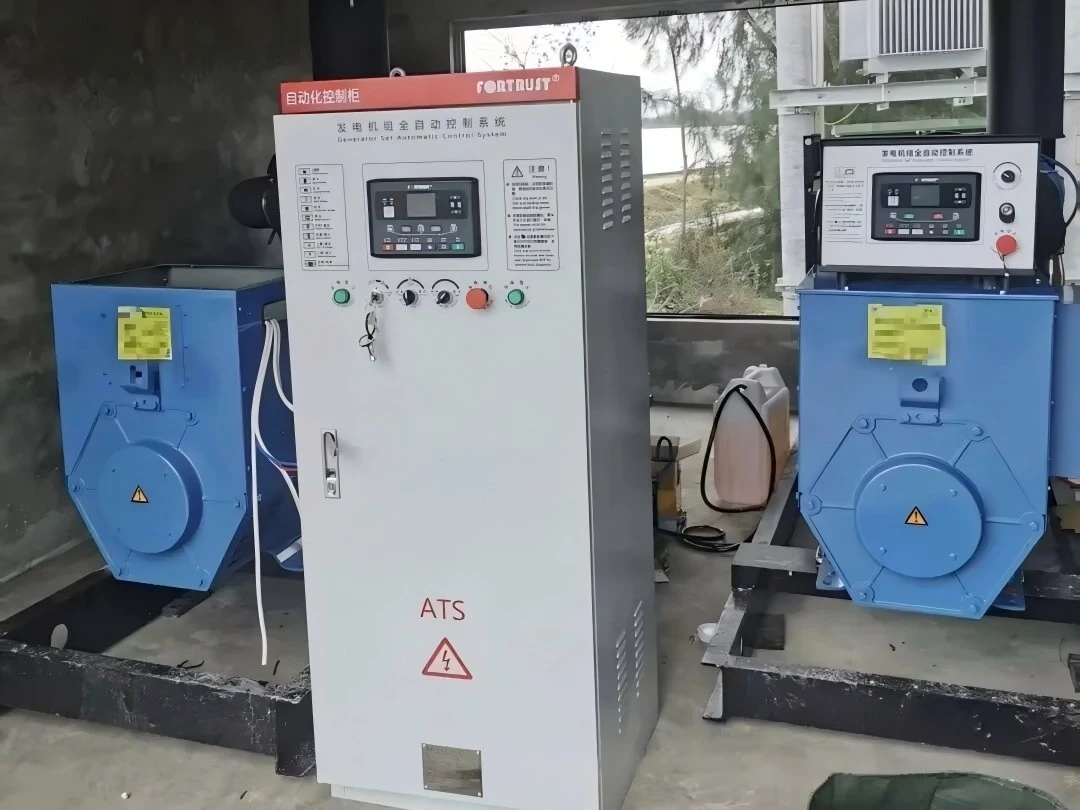
VI. Automatic Mode & Supporting Function Adjustment (For Models with ATS Control Cabinet)
1. Switch to Auto mode, simulate mains power outage: after a delay, the controller should automatically start the unit, and automatically close the breaker output when voltage meets spec.
2. Simulate mains power restoration: the unit should first open the breaker to unload, idle and cool for 3–5 minutes, then automatically shut down and enter standby mode.
VII. Final Inspection and Factory Sealing
1. After all tests are completed, shut down and cool the machine, then check the entire unit for any oil leaks, water leaks, or loose components;
2. Export the operation test data and fill out the factory inspection qualification report;
3. Clean the machine's oil stains, seal the pipeline interfaces, disconnect the battery, and complete the protective packaging of the entire unit.
Finally, the factory inspection standards for the unit, sudden load addition and removal test data forms, and diesel generator sudden load addition/removal test 200 kW data examples (GB/T 2820.5 / ISO 8528-5) are for reference only. Please refer to the previously written article, follow us, and stay updated with practical knowledge on diesel generators.