

A Diesel Generator Set Is Rated At 400V, While The Mains Electricity Is Said To Be 380V. A Complete Explanation in An Easy-to-understand Manner.
Sep 01, 2026
Leave a message

A diesel generator set is rated at 400V, while the mains electricity is said to be 380V. A complete explanation in an easy-to-understand manner.
Ⅰ. Core Summary in One Sentence
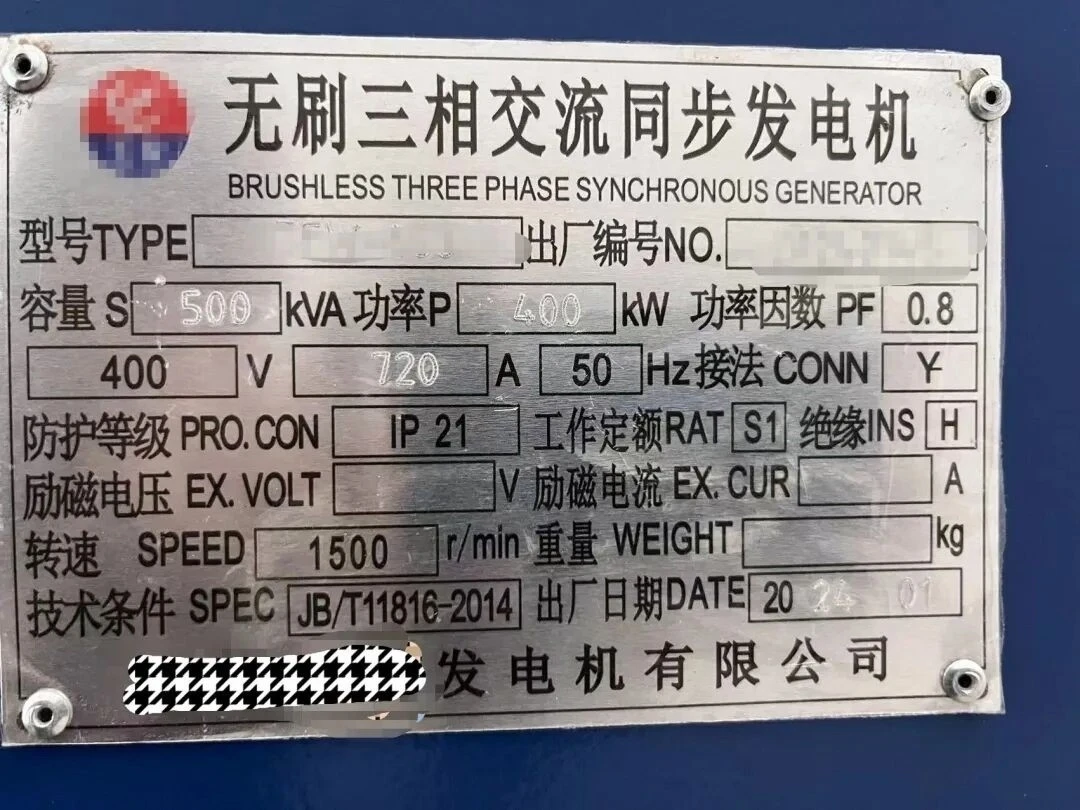
Diesel generator sets have a no-load standard output of 400V three-phase line voltage; after loading, there is a voltage drop, and during stable operation, the grid standard working voltage is 380V. The two are part of the same power supply system, only distinguished as 'no-load rated' and 'full-load rated.'
Ⅱ. Breaking Down the Principle
1. Low Voltage Distribution Standard Reference
In China, the reference phase voltage for low-voltage three-phase distribution systems is 220V. The line voltage is theoretically calculated as 220 × √3 ≈ 381V, which the industry commonly simplifies as 380V; this is the standard voltage for equipment under long-term load.
2. Reasons for Generator Design at 400V
2.1. To compensate for line voltage loss (most critical)
Diesel generators often need to supply loads over long cable distances. Cables have resistance, and current flow causes voltage drops. If a generator were only to output 380V from the factory, the voltage at the load end could drop below 350V when powering high-power equipment, causing pumps, motors, and air compressors to lose power, trip, or burn out. Reserving an extra 20V compensates for cable loss and ensures a stable 380V at the load end.
2.2. To adapt to load fluctuation voltage drops
When a load is suddenly added or a high-power motor starts, the inrush current can cause an instantaneous voltage drop. The 400V no-load voltage ensures that the voltage will not fall below the 380V standard after such impacts.
2.3. National Standard Generator Rating
The Chinese national standard GB/T 2820 specifies that AC synchronous diesel generators have a rated line voltage of 400V and a phase voltage of 230V. Correspondingly, city power transformers also output 400V at no load; after delivery to buildings and communities, voltage drops to around 380V at the user side, which is completely logical.
2.3. Correspondence with 220V Single-phase Supply
A 400V three-phase generator corresponds to 230V phase-to-neutral voltage in single-phase. After distribution to homes, voltage drops to 220V for everyday use, which aligns with the three-phase logic.
Ⅲ. Practical Scenario Distinctions
1. Generator at No Load (no equipment running)
Measure line voltage with a multimeter: 390–400V is normal.
2. Generator at Full Load (all equipment on)
If cables are short and load is balanced, voltage drops to 375–390V, commonly referred to as 380V industrial power.
Ⅳ. Common Misconceptions
1. Misconception: 400V and 380V equipment are not compatible
Correction: Fully compatible. All 380V motors, distribution boxes, and switches in China are compatible with 400V generators under a unified low-voltage system.
2. Misconception: 400V voltage is too high
Correction: 400V at no-load is a design margin, not a fault. Only if the voltage remains above 400V under full load should the AVR voltage regulator be adjusted to reduce it.
Brief Summary
400V is the no-load rated factory standard of diesel generators, and 380V is the standard working voltage for loaded electrical equipment. The extra 20V compensates for line losses and ensures stable operation. Both are essentially part of the same three-phase power supply system.